Medical billing and coding programs in Alabama prepare you for a career earning $53,576 per year on average. The state has one IPEDS-reported training program at Columbia Southern University, plus access to nationally accredited online options. Alabama doesn't require state licensure, but employers strongly prefer CPC, CCA, or CBCS certification.
- 1.Medical billing and coding professionals in Alabama earn an average of $53,576 per year, roughly $3,300 above the national BLS median of $50,250 (AAPC, 2024).
- 2.Columbia Southern University in Orange Beach is Alabama's primary in-state option, offering an online program at about $5,528 per year.
- 3.Alabama's aging population (17.7% are 65+, per U.S. Census data) drives rising healthcare utilization and steady demand for trained coders.
- 4.The BLS projects 7% employment growth for medical records specialists from 2024 to 2034, with approximately 14,200 annual openings nationwide.
- 5.No state license is required in Alabama, but most employers prefer candidates with a CPC, CCA, or CBCS credential.
$53,576
Alabama Avg Salary
AAPC, 2024
1+
Training Programs
IPEDS 2023-2024
7%
Job Growth
2024-2034, BLS
14,200
Annual Openings
Nationwide, BLS
Medical Billing and Coding in Alabama
Alabama's healthcare sector supports steady demand for trained medical billing and coding professionals. Major hospital systems like UAB Health System in Birmingham, Huntsville Hospital, and Mobile Infirmary employ coders who assign diagnosis and procedure codes, submit insurance claims, and manage revenue cycles. Hundreds of physician practices, outpatient clinics, and rural health facilities across the state need the same expertise.
The state's aging population plays a direct role in job demand. Approximately 17.7% of Alabama residents are 65 or older (U.S. Census data), which increases healthcare utilization and the volume of medical records that require coding. Rural hospitals across the state also face workforce shortages, so qualified medical coders are needed outside the Birmingham and Huntsville metro areas too.
Alabama doesn't require a state license or registration to work as a medical biller or coder. That said, earning a nationally recognized certification significantly improves your hiring prospects and earning potential. For a broader look at the field, see our guide on what medical billing and coding involves.
Source: AAPC, 2024
Medical Billing and Coding Training Programs in Alabama
Alabama has a limited number of campus-based medical billing and coding programs. According to IPEDS data (2023-2024), the primary in-state option is Columbia Southern University in Orange Beach, a private for-profit institution offering a fully online program at approximately $5,528 per year.
Because in-state options are limited, many Alabama residents pursue training through nationally available online programs. These include Ultimate Medical Academy (the largest MBC program by completions), Penn Foster (self-paced career diploma, $1,049-$1,869), Purdue University Global ($10,080/year), and Western Governors University ($7,710/year, competency-based). All are regionally or nationally accredited and prepare you for CPC, CCA, or CBCS certification exams.
When you're evaluating programs, confirm that the curriculum covers ICD-10-CM, CPT, and HCPCS Level II coding systems, plus medical terminology, anatomy and physiology, and healthcare billing procedures. Programs approved by AAPC or accredited by AHIMA's CAHIIM carry additional credibility with employers. For a step-by-step walkthrough, see How to Become a Medical Biller and Coder.
Private for-profit institution in Orange Beach offering a fully online medical billing and coding program at approximately $5,528/year. The only IPEDS-reported in-state program.
Key Points
- ICD-10-CM and CPT coding
- Online, self-paced format
- Accessible from anywhere in Alabama
Multiple accredited online programs are available to Alabama residents, ranging from $1,049 (Penn Foster) to $10,080 (Purdue Global) per year.
Key Points
- Ultimate Medical Academy (largest by completions)
- Western Governors University (competency-based, $7,710/yr)
- Penn Foster (self-paced diploma, $1,049-$1,869)
Certification Requirements for Alabama Medical Coders
Alabama has no state-level licensing requirement for medical billers or coders. Certification is voluntary but strongly preferred by employers. The three most common entry-level credentials are the CPC (Certified Professional Coder) from AAPC, the CCA (Certified Coding Associate) from AHIMA, and the CBCS (Certified Billing and Coding Specialist) from NHA.
The CPC is the most widely recognized credential. It costs $425 for one attempt ($499 for two), features 100 multiple-choice questions over 4 hours, and allows open codebooks. The CCA runs $199-$299, takes 2 hours with 105 questions, and requires only a high school diploma. The CBCS is the most affordable at approximately $117 and covers both billing and coding fundamentals.
Certified coders earn significantly more than their uncertified peers. According to AAPC's salary data, certified professionals average $62,689 per year nationally, roughly $7,000 more than uncertified workers. Holding three or more certifications pushes the average to $84,414. See our full certification comparison for details on all five major credentials.
Source: AAPC, 2024
Alabama Medical Coding Salary and Job Outlook
Medical billing and coding professionals in Alabama earn an average of $53,576 per year, or about $25.76 per hour (AAPC, 2024). That puts Alabama approximately $3,300 above the national BLS median of $50,250 for medical records specialists (SOC 29-2072).
Salaries vary by location, employer type, and certification status. Coders in the Birmingham metro area, home to UAB Health System and several large hospital networks, tend to earn more than those in rural parts of the state. Hospital-employed coders typically out-earn those at small physician practices because of the complexity of inpatient coding.
Nationally, the BLS projects 7% employment growth for medical records specialists from 2024 to 2034, with approximately 14,200 annual openings. Alabama's growing elderly population and expanding healthcare infrastructure suggest the state will track closely with the national growth rate. For a detailed salary breakdown, visit our Salary Guide.
Career Opportunities for Medical Coders in Alabama
Alabama's healthcare industry provides a range of employment settings. Major employers include UAB Health System, Huntsville Hospital, DCH Health System, Baptist Health, and numerous physician group practices, outpatient surgery centers, and third-party billing companies. The state also has a network of community health centers and rural hospitals that need coding support.
Remote work has expanded your career options significantly. According to AAPC's 2024 survey, approximately 65.7% of medical coders work remotely full time. That means you can pursue positions with national employers like Optum, Datavant, and The Coding Network without relocating. Remote positions typically require at least one certification and 1-2 years of on-site experience.
Source: AAPC, 2024
Steps to Start Your Medical Billing and Coding Career in Alabama
Complete a training program
Enroll in an accredited program covering ICD-10-CM, CPT, and HCPCS Level II. Columbia Southern University ($5,528/yr) is the primary in-state option, or choose from national online programs like Penn Foster ($1,049-$1,869) or WGU ($7,710/yr).
Earn your certification
Pass the CPC ($425-$499), CCA ($199-$299), or CBCS (~$117) exam. The CPC is the most recognized credential among Alabama employers.
Gain practical experience
Look for entry-level positions at Alabama hospitals, clinics, or billing companies. Many coders start with an apprentice designation (CPC-A) and convert to full CPC status after gaining experience.
Explore remote opportunities
After 1-2 years of on-site experience, you'll qualify for remote positions with national employers. About 65.7% of medical coders work from home full time (AAPC, 2024).
Frequently Asked Questions About Medical Billing and Coding Programs in Alabama
Continue Exploring
Latest Articles

Medical Billing and Coding Industry Trends 2026
AI-assisted coding, value-based care, and remote work are reshaping the medical coding profession.
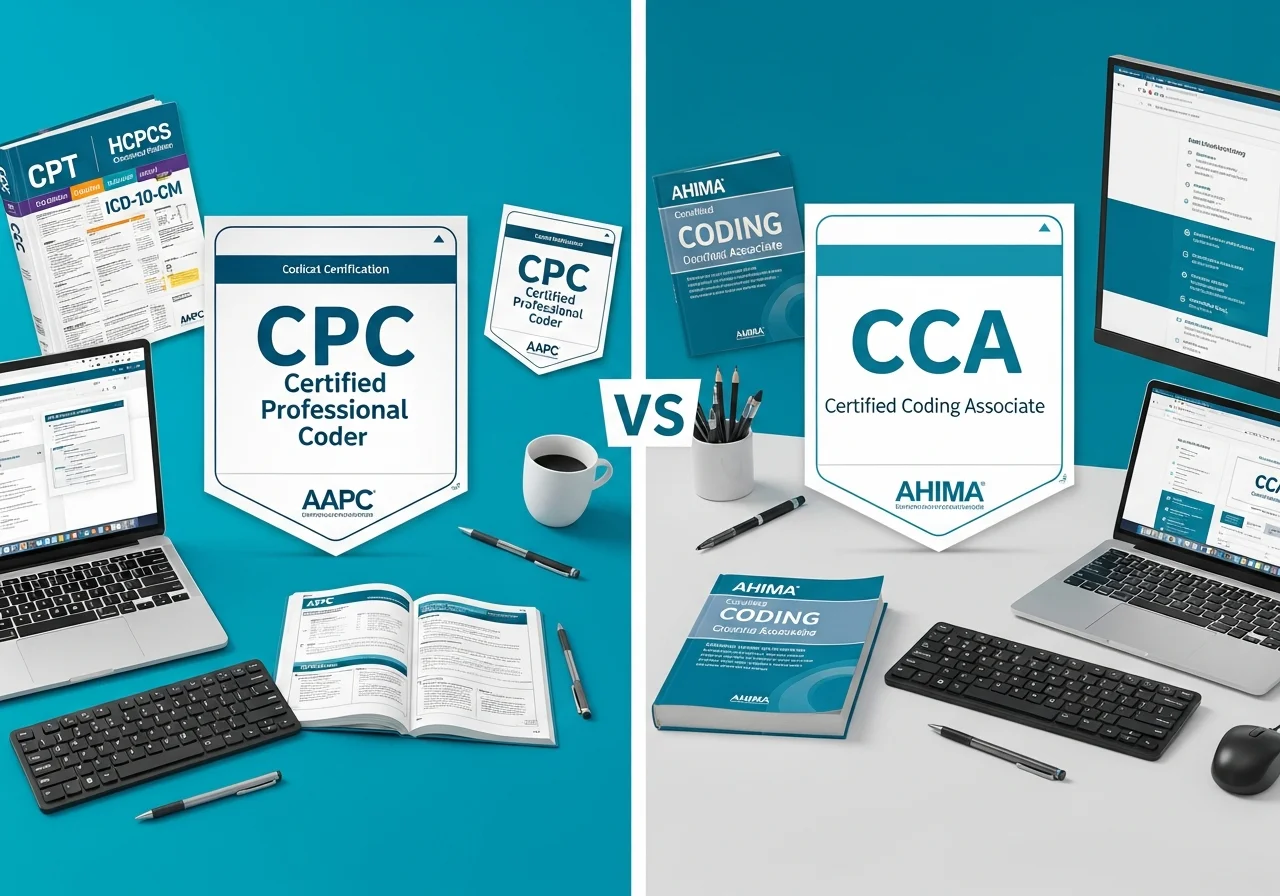
CPC vs CCA: Which Certification?
Comparing AAPC and AHIMA entry-level certifications: cost, difficulty, employer preference, and career impact.

Can AI Replace Medical Coders?
What automation means for medical coders: which tasks are changing and which skills remain essential.

Angela R.
Medical Billing & Coding Specialist | Consultant
Angela worked as a medical billing and coding specialist for multiple chiropractors and orthopedic surgeons. After years in the field, she started her own medical billing and coding consulting company, working with numerous clients throughout Southern California. She brings firsthand industry experience to every article on this site.