
Medical billing and coding careers combine stable job growth with real earning potential and strong remote-work options. The BLS projects 7% employment growth for medical records specialists through 2034, with 14,200 annual openings. Certified professionals earn an average of $66,979/year, and about 64.8% of medical coders work remotely at least part-time. The career ladder runs from entry-level coder through senior specialist, auditor, and HIM director roles.
- 1.The BLS projects 7% employment growth for medical records specialists (SOC 29-2072) from 2024 to 2034, with roughly 14,200 openings each year.
- 2.Median annual pay is $50,250 (BLS, May 2024). AAPC-certified professionals average $66,979, and those with three or more credentials average $81,227.
- 3.Hospitals employ the largest share of medical records specialists at 58.6%, followed by physician offices at 20.2% and outpatient care centers at 11%.
- 4.About 64.8% of medical coders work remotely at least part-time, making this one of the most location-flexible healthcare careers.
- 5.Career progression runs from entry-level coder ($37,500-$50,000) through senior coder, coding auditor, and HIM director ($110,000+).
Medical Records Specialist
SOC 29-2072Medical Billing and Coding Job Outlook and Growth
The Bureau of Labor Statistics projects 7% employment growth for medical records specialists between 2024 and 2034, faster than the average for all occupations. That rate translates to roughly 14,200 job openings per year when you combine new positions with turnover replacements. As of 2024, approximately 194,800 people hold the title nationally.
Several forces drive this demand. The shift from fee-for-service to value-based care makes accurate coding more important than ever, because reimbursement now hinges on correctly documented outcomes. ICD-10-CM's 72,000-plus diagnosis codes require trained specialists, and annual code set updates keep employers hiring. An aging population also generates more healthcare encounters that need to be coded and billed.
CPC-certified coders face an even tighter labor market. AAPC's 2025 salary survey found just a 2.5% unemployment rate among certified professionals, well below the national average. That gap shows the protection a credential provides.
Source: BLS OEWS, May 2024
Medical Billing and Coding Salary Overview
The BLS reports a median annual wage of $50,250 for medical records specialists as of May 2024. The lowest 10% earn less than $35,780, while the highest 10% earn more than $80,950. Geographic location, certification status, and employer type all influence where you'll fall in that range.
Certification creates a measurable salary gap. According to AAPC's 2025 salary survey, certified professionals earn an average of $66,979 per year, roughly 20.7% more than uncertified peers at $55,721. The premium grows with additional credentials: members holding two certifications average $71,130, and those with three or more average $81,227.
Specialization matters too. HCC risk adjustment coders average roughly $84,640/year according to ZipRecruiter data, with top earners reaching $124,023. Inpatient hospital coders, surgical coding specialists, and compliance auditors also command premiums over generalist roles.
Entry-level salaries typically fall between $37,500 and $50,000. Freelance and contract coders report average hourly rates around $29.99, though experienced independent coders billing specialty work can charge $34 to $45 or more per hour. See our salary guide for state-by-state breakdowns.
Medical Billing and Coding Career Progression Ladder
Total Time: 15+ years to director levelEntry-Level Coder or Billing Clerk
Most people start here after completing a certificate or associate degree program and passing the CPC-A (Apprentice), CCA, or CBCS exam.
- Assign codes to outpatient encounters
- Process claims and post payments
- Salary range: $37,500-$50,000
Certified Coder
After logging enough professional experience to remove the apprentice designation, coders often pursue specialty credentials like CIC, COC, or CRC.
- Handle more complex coding assignments
- Pursue specialty certifications
- Salary range: $55,000-$70,000
Senior Coder or Coding Specialist
Senior coders handle complex cases (surgical, ED, multi-specialty), mentor junior staff, and may lead small teams.
- Complex case coding (surgical, multi-specialty)
- Team mentoring and quality review
- Salary range: $70,000-$85,000
Coding Auditor or Compliance Specialist
Auditors review coded records for accuracy, identify undercoding/overcoding patterns, and help organizations avoid regulatory penalties. The CPMA credential from AAPC is standard.
- Review coded records for compliance
- Prepare audit reports and train staff
- Salary range: $70,000-$95,000
HIM Manager or Revenue Cycle Manager
Management roles oversee coding teams, set department policies, coordinate with CDI specialists, and report to senior leadership. RHIA or RHIT credentials from AHIMA are common.
- Manage coding teams and set policies
- Coordinate CDI programs
- Salary range: $80,000-$110,000
Director of Health Information Management
Directors set organizational strategy for coding compliance, data governance, and revenue integrity. The BLS reports medical and health services managers earn a median salary of $110,680/year.
- Set organizational compliance strategy
- Oversee multimillion-dollar budgets
- Median salary: $110,680 (BLS)
Source: Data USA analysis of BLS data
Top Employers for Medical Billing and Coding Careers
On the corporate side, several large organizations dominate remote and on-site coding employment. Optum (a UnitedHealth Group subsidiary) is one of the largest single employers of medical coders in the country, with positions spanning risk adjustment, outpatient, and inpatient coding at hourly rates from about $23 to $42.
Other major employers include The Coding Network (TCN), AGS Health, Datavant (formerly Ciox Health), GeBBS Healthcare Solutions, and CVS Health/Aetna. Regional health systems, third-party billing firms, and insurance carriers round out the employer landscape.
The scientific research and development sector pays the highest average wages at roughly $80,965 per year, about 56% more than the occupation's overall average, according to Data USA. Employer type can matter as much as geography for your bottom-line pay.
About 64.8% of medical coders work remotely at least part-time (AAPC 2025). Remote coders connect through VPN, review records in EHR systems, and submit coded encounters digitally. Most remote positions require 1-2 years of on-site experience first.
Key Points
- Self-discipline and time management
- HIPAA-compliant home office setup
- EHR and encoder software proficiency
Common Jobs
- • Remote outpatient coder
- • Remote HCC risk adjustment coder
- • Remote billing specialist
Hospitals employ 58.6% of all medical records specialists. On-site coders benefit from direct access to clinical staff for query resolution and typically handle more complex inpatient cases including surgical and DRG coding.
Key Points
- Inpatient DRG assignment
- Clinical documentation queries
- ICD-10-PCS procedure coding
Common Jobs
- • Inpatient hospital coder
- • CDI specialist
- • Coding auditor
Physician offices account for 20.2% of employment. These positions focus on outpatient E/M coding, CPT procedure codes, and ICD-10-CM diagnosis assignment. Many offices combine coding and billing duties in a single role.
Key Points
- E/M level selection
- CPT code assignment
- Claims submission and follow-up
Common Jobs
- • Medical coder
- • Billing and coding specialist
- • Practice billing manager
Third-party billing companies and RCM firms employ coders and billers to serve multiple healthcare clients. These roles often involve high-volume production coding and strong exposure to various medical specialties.
Key Points
- Multi-specialty coding
- Production volume targets
- Denial management
Common Jobs
- • Coding specialist
- • Denial management analyst
- • Revenue cycle analyst
Source: AAPC 2025 Salary Survey
How to Start Your Medical Billing and Coding Career
Research training programs
Look for accredited certificate programs (4-9 months) or associate degree programs (~2 years). Programs should cover ICD-10-CM, CPT, HCPCS, medical terminology, and anatomy. Check whether exam prep is included.
Earn your first certification
Choose between the CPC ($425 + $222 membership), CCA ($199-$299), or CBCS (~$117). Your choice depends on your target work setting and budget. See our certification comparison for guidance.
Land an entry-level position
Apply to hospitals, physician offices, and billing companies. Entry-level salaries typically range from $37,500 to $50,000. Many new coders hold the CPC-A (Apprentice) designation until they accumulate 2 years of professional experience.
Build specialty expertise
After 2-3 years, pursue specialty credentials (CIC, COC, CRC, CPMA) to boost your earning potential. Specialists in HCC risk adjustment, surgical coding, and auditing earn $70,000-$95,000+.
Advance to management or consulting
With 8-15 years of experience, move into HIM management ($80,000-$110,000) or independent consulting. RHIA/RHIT credentials from AHIMA support management-track advancement.
Medical Billing and Coding Career Guides
We've assembled in-depth guides for every stage of a medical billing and coding career. Whether you're exploring remote opportunities, preparing for your first interview, or deciding on a specialty track, these resources cover the details you'll need.
Remote Medical Billing and Coding Jobs - How to find, land, and succeed in work-from-home coding and billing roles, including which companies hire remote coders and what equipment you'll need.
Entry-Level Medical Billing and Coding Jobs - A roadmap for new graduates: realistic salary expectations, how to get hired without experience, and the CPC-A apprentice path.
Medical Coding Specializations - From HCC risk adjustment to surgical coding to compliance auditing: specialty tracks, salary premiums, and required certifications.
Source: BLS Occupational Outlook Handbook
Frequently Asked Questions
Explore Career Guides
Latest Articles

Medical Billing and Coding Industry Trends 2026
AI-assisted coding, value-based care, and remote work are reshaping the medical coding profession.
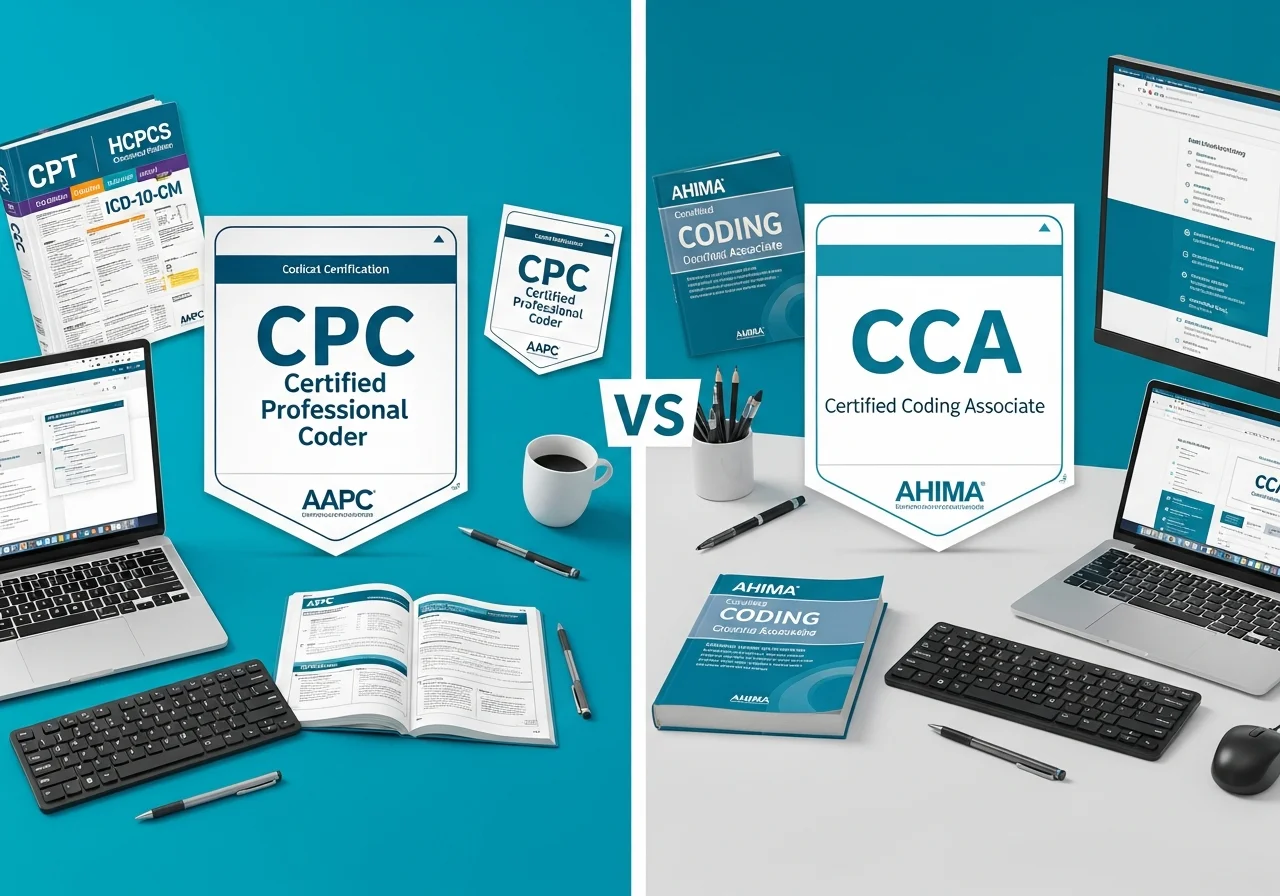
CPC vs CCA: Which Certification?
Comparing AAPC and AHIMA entry-level certifications: cost, difficulty, employer preference, and career impact.

Can AI Replace Medical Coders?
What automation means for medical coders: which tasks are changing and which skills remain essential.

Angela R.
Medical Billing & Coding Specialist | Consultant
Angela worked as a medical billing and coding specialist for multiple chiropractors and orthopedic surgeons. After years in the field, she started her own medical billing and coding consulting company, working with numerous clients throughout Southern California. She brings firsthand industry experience to every article on this site.